Vintage Jean Paul Gaultier eyewear is now expensive enough that fakes are worth making. The good news: 1990s JPG frames were built in Japan to a standard that is very hard to copy cheaply. If you know where to look, a counterfeit usually gives itself away in under a minute. Here is the exact order we check a frame in before it gets listed.
The short versionRead the temple stamp, weigh the frame in your hand, inspect the hinge and fork joins under light, then look at how the plating has aged. Real frames pass all four. Cases and cloths prove nothing on their own.
The model code on the temple.
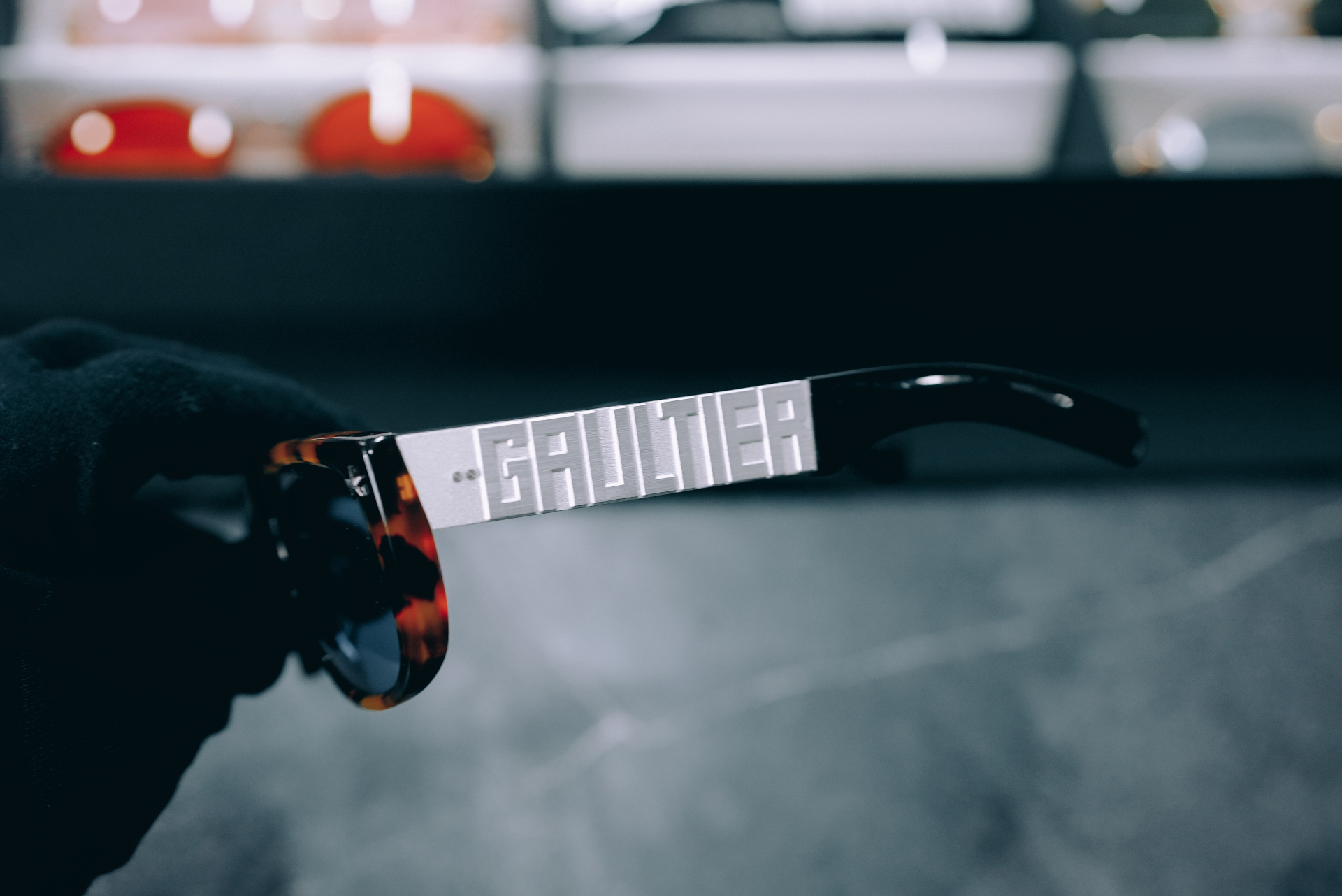
Open the arms and look inside the left temple. A genuine piece carries a 56- code for sunglasses or 55- for optical frames — for example 56-0174 or 55-3175 — followed by a size string and Made in Japan.
What fakes get wrong: invented model numbers that do not appear in any period catalog, spacing and font weight that drift across the line of text, and crisp modern laser etching on a frame that should show 1990s pad printing or a shallow stamp. Period printing wears at the edges; it does not look freshly burned in.
Weight, and the cold test.
Most collectible 56-series frames are titanium or high-grade plated metal made by Murai. Real metal feels cool against the back of your hand and warms slowly. Zinc-alloy copies feel either oddly heavy and dead, or suspiciously light and hollow, and they warm instantly. Balance matters too: an original sits level when you rest it on a flat surface, because the temples were finished as a matched pair.
Fork temples and hinge joins.
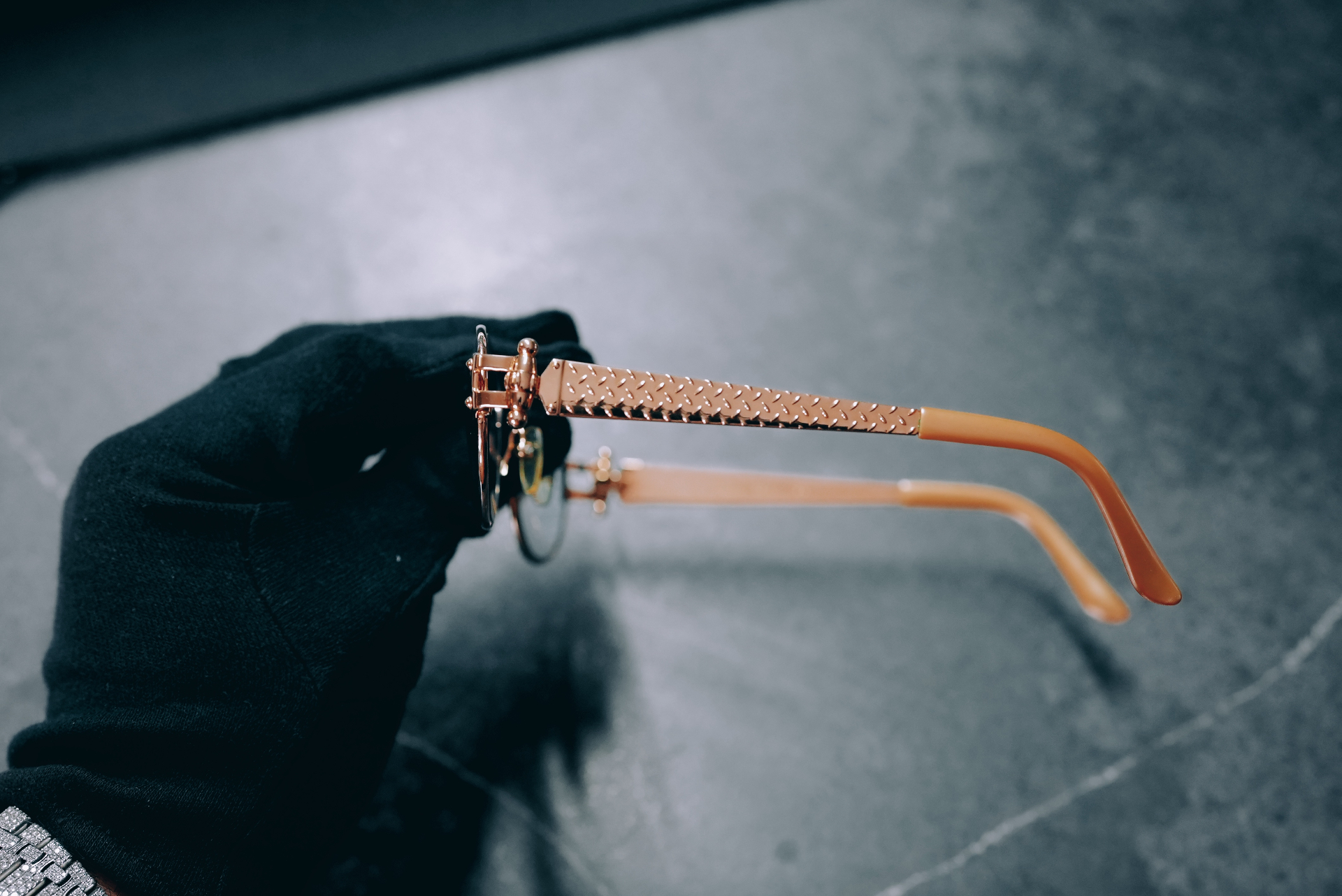
The fork temple — the split, two-pronged arm — is the single most-copied Gaultier signature, and the hardest to fake well. On an original, both prongs are worked from one piece: the gap between them is even along its whole length, the inside edges are polished, and the tips line up exactly.
Counterfeits show a weld seam where the prongs meet, casting flash inside the fork, prongs of slightly different length, or a gap that tapers. Then work the hinge: originals open with smooth, firm resistance and no side play. A hinge that flops open under its own weight, or grinds, is either a fake or a frame that has been rebuilt.
How the plating has aged.
A thirty-year-old frame should look thirty years old in the right places: light brassing at the bridge, behind the ears, and on the temple tips where skin and hair contact the metal. Wear that appears in random spots, or a frame that is flawless but priced like a survivor, deserves a second look. Uniform, mirror-bright plating with zero contact wear is usually a modern piece or a full re-plate — not necessarily fake, but it changes the value, and any honest seller will say so.
Cases, cloths, and paperwork.
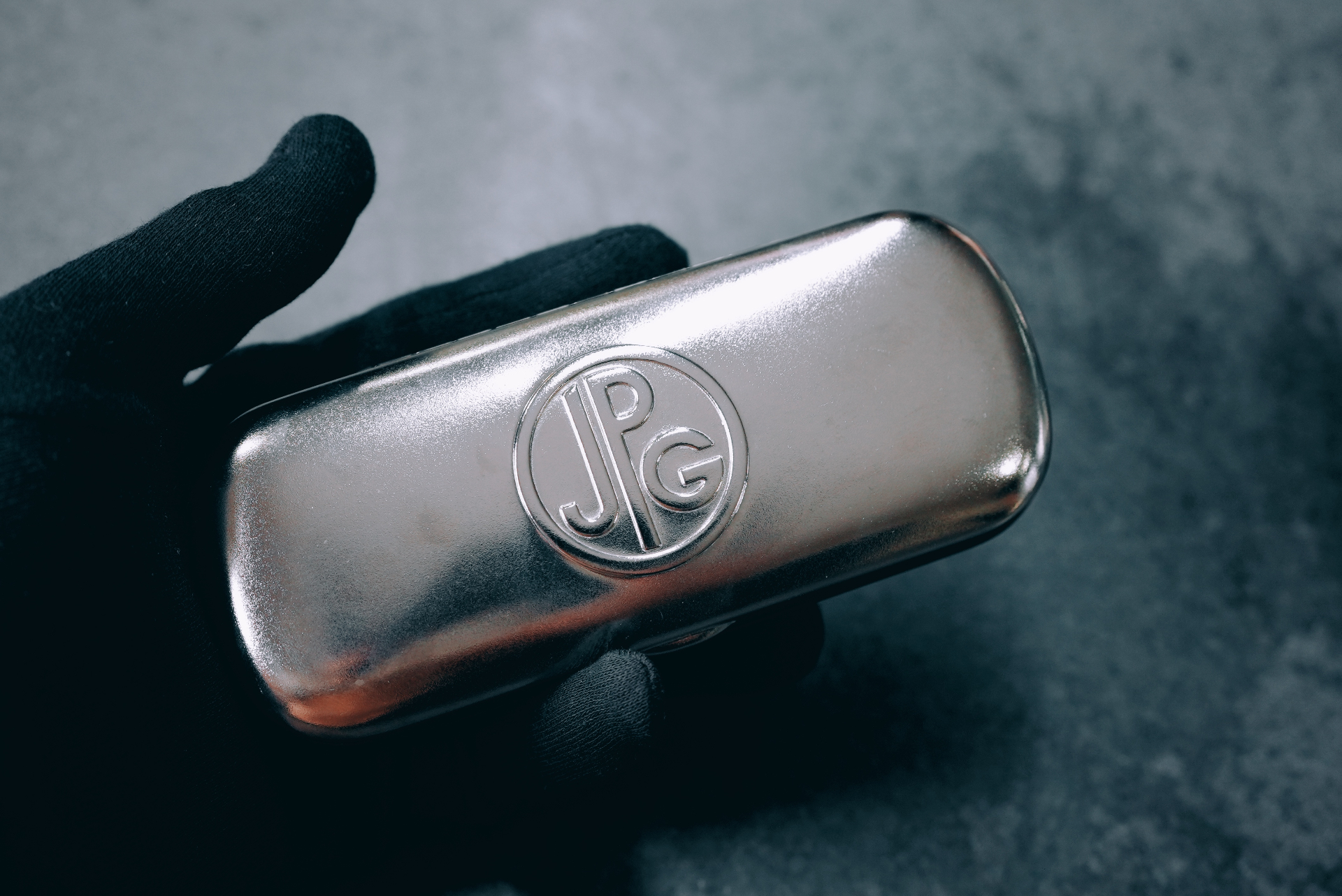
Cases get separated from frames constantly, and they are reproduced more often than the eyewear itself. A correct case is a nice sign; it is not evidence. Judge the frame, then let the packaging add context. The same goes for a seller's certificate — it is only worth the reputation of whoever signed it.
Learn on real examples.
Every Gaultier piece in our archive is photographed at the hallmarks so you can compare against a known original before you buy anywhere.
Frequently asked questions.
- How do I know if my Jean Paul Gaultier sunglasses are real?
- Check for a 56- or 55- model number with a matching size string, "Made in Japan" on the temple, real metal weight and cold feel, tight riveted or forked hinges, and period-correct plating wear. Any one tell can be faked; genuine frames pass all of them together.
- What are Gaultier fork temples?
- Fork temples are the split, two-pronged arms used on several 56-series models. On originals the two prongs are milled from one piece with even gaps and clean edges; fakes usually show welded seams, uneven prongs, or soft casting marks.
- Where is the model number on vintage JPG frames?
- Inside the temple arm, usually stamped or pad-printed: the model (for example 56-0174 or 55-3175), followed by the size, then "Made in Japan". Missing or laser-etched-looking text on a supposedly 1990s frame is a red flag.
- Are the case and papers proof of authenticity?
- No. Cases and cloths are commonly mixed, reproduced, or sold separately. Treat them as supporting evidence only — the frame itself has to pass.
- Does 858 Vintage authenticate every piece?
- Yes. Every frame is checked against period catalogs, hallmark stamps, and construction details before it is listed, and each listing shows the photographed hallmarks.